Tuesday, March 18, 2014

IV/31 Nicaea Byzantine


This 15mm DBA 2.2 Army consists of 12 elements: All Miniatures by Essex

1 x 3Cv General, 1 x 3Cv, 2 x 3Kn, 4 x 2Lh, 1 x 4Sp, 1 x 4Bw, 2 x 2Ps

Historical Enemies: Seljuq Turk, Romanian Frank, Epirot Byzantines - Latin Empire.


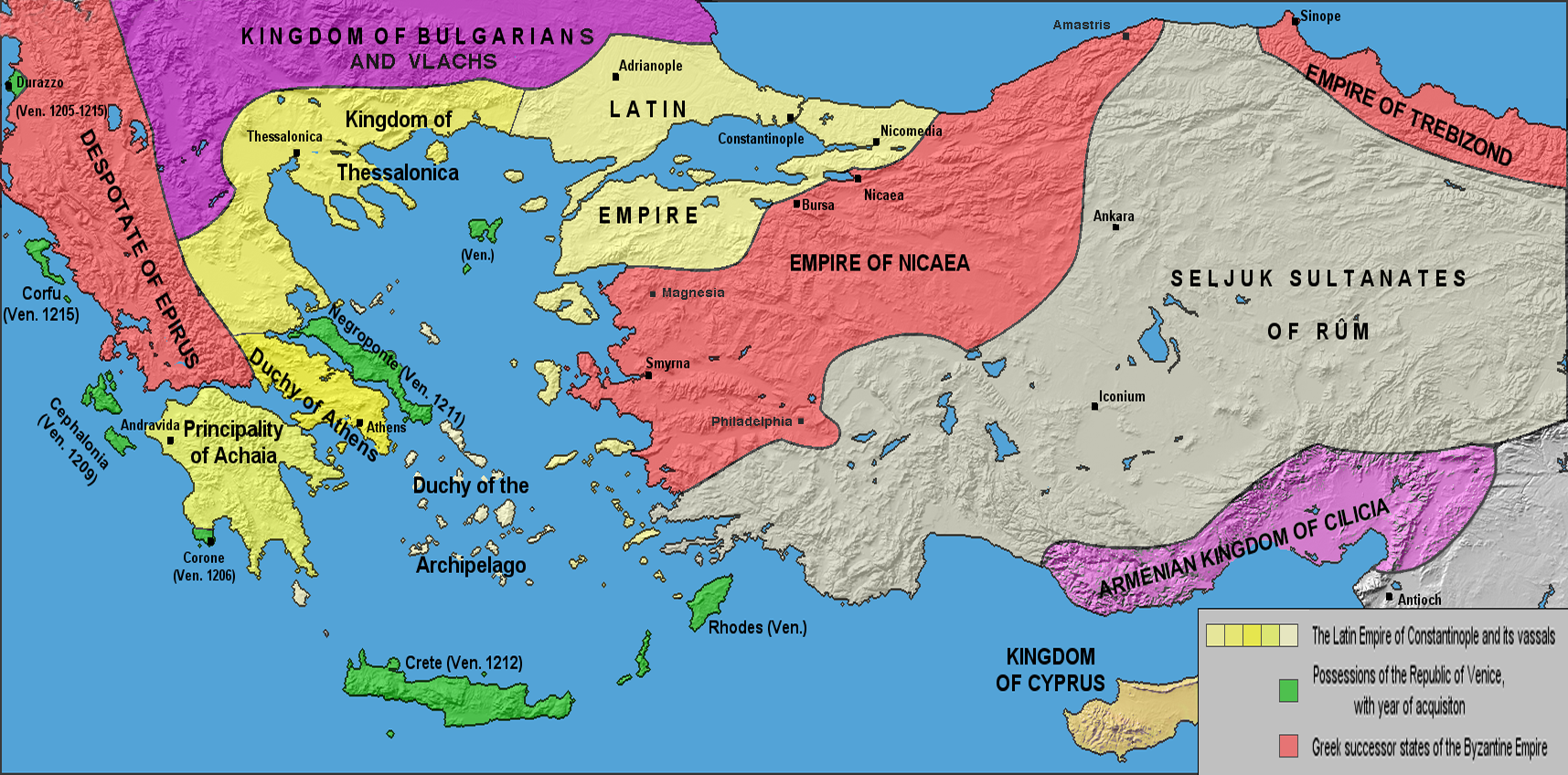
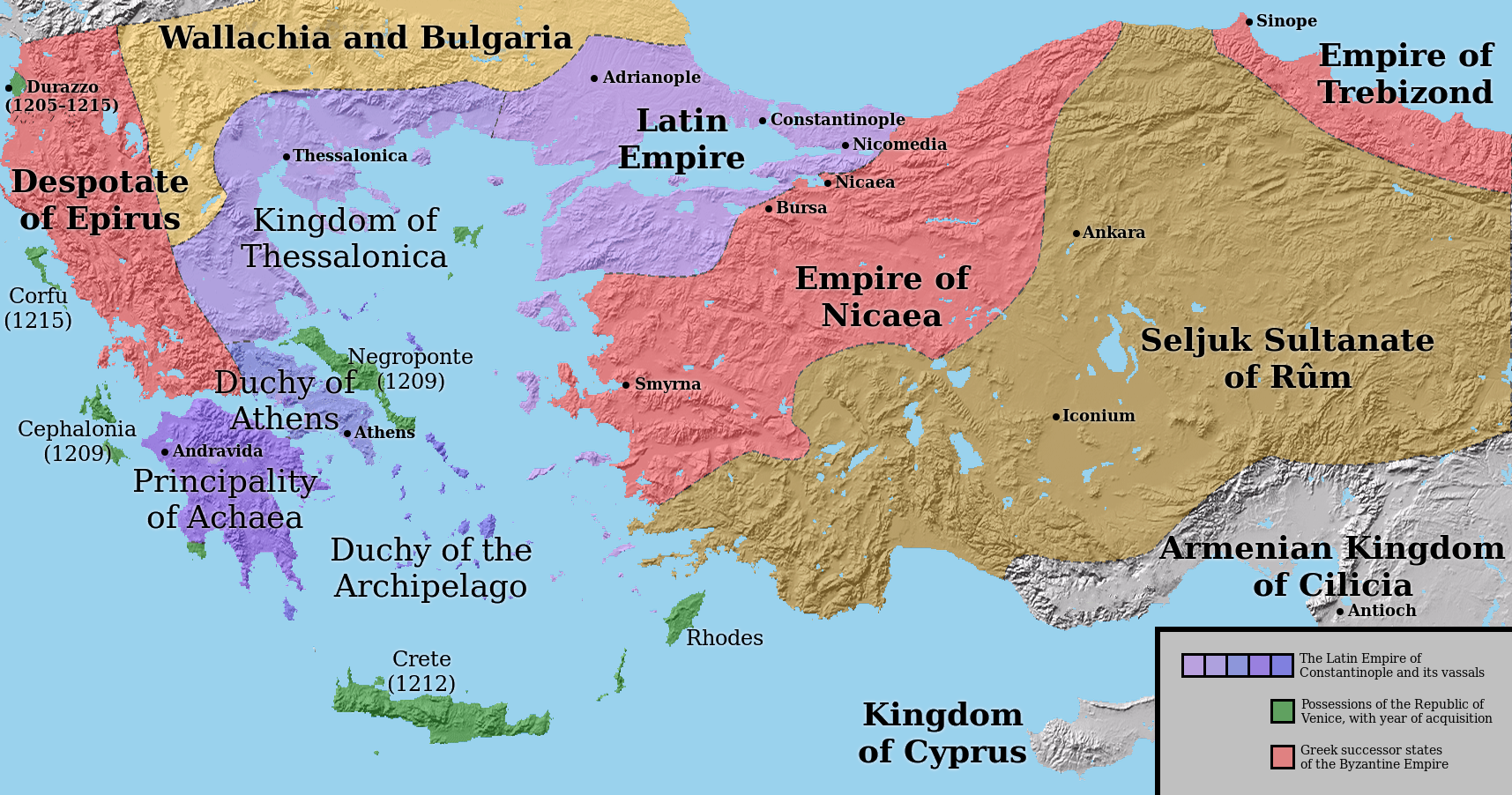
Brief Historical NotesNikaian Empire was founded 1204 - 1261 by the Laskaris or Lascaris family, who were Greek Byzantine nobles...for more information visit the Laskaris web site.

Historically the Nikaian Byzantines were a crack fighting cavalry force and often defeated their opponents i.e. the Seljuq Turks at Antioch in 1211, the Latin Empire at Poimanenon in 1224 and the Achaean Franks at Pelagonia in 1259.

My Nikaian or Nicaea are another typical 13th Century Byzantine Army with lots of cavalry and a handful of foot elements. 
The player really needs to focus and protect his/her flanks with Light Horse (Lh) units while trying to hold his/her center with a hand full of infantry units supported with (Cv) Cavalry and (Kn) Knights. This is a good and playable army which will test the player tactical skills against his/her opponents during table top conflict's against the Turks and other Successor Byzantine States i.e. The Latins, Romanian Frank's and Epirot Byzantine Armies.

To the figures I wasn't to sure about the historical shield designs for the Spearmen I was just plain lazy on my part and painted simple "campaign shield design" another words, one plain sandy/dusty flat color.  ;o) Also..um.. I think in the future I will not take anymore close up photos of my painting, one can see the brush strokes which is a little embarrassing :o)


Army Arrayed


General 3Cv and 3Cv (Stratiotai/Lancers)


2 x 3Kn (Latinikon Knights)


Left of Photo 2 x 2Lh (Tourkopouloi)

2 x 2Lh (Cumans)

Kontaratoi 4Sp with 4Bw and 2Ps
 2 x 2Ps Anatolia Archers Left of Photo


Tuesday, March 11, 2014

IV/32 Romanian Frank

1204 AD - 1311 AD

This DBA 2.2 

Army consists of 12 elements: Miniatures by 15mm Essex


1 x (General) 3Kn,  4 x 3Kn, 1 x 3Cv, 1 x 3Cb, 1 x 4Sp, 4 x 2Ps


Historical Enemies: Seljuq Turks, Later Bulgar's, Nikaian, Epirot, Palaiologan and Morean Byzantines and the infamous Catalan Company.


This Army was fun, painting up the shields for the Knights and Infantry, painting the Caparisons (a cloth covering over a horse for minor protection and decoration)
 color schemes etc.

I used light shades of gray for the base flocking to show the painted miniatures pop out more and perhaps visual appealing on the table? :o) 


Historically the poor :o) Romanian Franks had a handful of tough fighting against the Nikaian Byzantines losing on most occasions. This DBA army would be ideal for any one who strongly believes he/she can change history and defeat the Nikaian Byzantines! :o)


Monday, March 3, 2014

IV/39a Navarrese

15mm Essex Miniatures DBA 2.2
This Army consists of 12 elements: 1 x General (3Kn)  6 x 3Ax, 1 x 3Cb, 1 x 3Sp, 3 x 2Ps

Historical Enemies: Feudal & Medieval Spanish, French, English, Morean Byzantines, Ottoman Turks, Catalan Company, Italian Condotta and Albanians.

Brief Historical NotesNavarre and Gascony Mercenaries fought during early 1200's to early 1400's These guys were hired by any or every factional group within the Latin Empire of Greece which was divided into vassal states. the Kingdom of Thessaloniki, the Principality of Achaea, the Duchy of Athens, the Duchy of the Archipelago, the Duchy of Philippopolis (Thrace) and the Duchies of Nicaea and Philadelphia (Asia Minor)

The Navarrese Army is playable and not bad at all the bulk of the army consists of light infantry units, speed is the key factor to over run your opponent. The terrain placing i.e. rough going, woods, steep hills etc. is obvious and critical for the Navarrese player to use in his favor for any chance of a victory. 


I decided to paint the Navarrese figures using shades of brown/tan/red/orange/deep reddish pinks colors, I hand painted the shields, which was fun to do. I would have liked the 9 Essex Ax figures (wearing tan/brown shirts) as Heavy 3Ax (The guys wearing helmets kite shields etc)... oh well..  I will hand paint the Banners for the 2 Cavalry figures Escorting the General at a later stage and um..  maybe for the 3Sp?  :o)  to make this Army/Company look pretty on the table top battlefield.


Tuesday, February 25, 2014

IV/49 Anatolian Turkoman

15mm Essex Miniatures DBA 2.2

This Army consists of 14 elements:

1 x (General) 3Cv,  6 x 2Lh, 2 x Ax, 1 x 7Hd, 2 x 2Ps or 3Bw

Historical Enemies: Armenian, Cypriot, Mameluke Egyptian, IIkhanid, Palaiologan Byzantines, Ottoman, Order of St.John, Catalan Company, Italian Condotta (free Companies) Jalayirid, Black/White Sheep Turkoman, Trapezuntine Byzantines and the Georgians.

Historical Notes: From what I read the Turks, or Turkic peoples, are descendants of large groups of nomads who roamed in the Altai Mountains (also know as Altaic peoples) in northern Mongolia and on the steppes of Central Asia. The Turkic language is, to my understanding, of the Ural-Altaic clans. Physically the Turkic peoples resemble the Mongols, although those of the West have been so mixed with native peoples that they cannot be distinguished from other Mediterranean ethnic groups. 

The original Central Asian Turkic nomads established their first great empire in the 500's AD, a nomadic confederation that they called Gokturk meaning "Blue or Sky Turk". 

The Uighur remained in northern Mongolia and the Kirgiz wandered in the steppes to the north. The Oguz Turks, called the Turkmen (Turkoman) in Europe, dominated the area between Mongolia and Transoxiania, where contacts with Muslim missionaries, merchants and warriors led to further assimilation. 

Under the leadership of the Seljuk warrior family, the Oguz tribes entered Iran and then other parts of the Middle East. They went as raiders and mercenaries in service of the weakening Abbasid caliphs and also were hired by many towns to provide defenses against the anarchical conditions of the time. 

The Oguz Turks, under the leadership of Tugrul Bey and Cagri Bey, (the grandsons of Seljuk), subdued Horasan and defeated the Ghaznavids in the Dandanakan Battle and established the Great Seljuk Empire in 1040 AD. In 1071 Alparslan defeated the Byzantine emperor in the Battle of Manzikert which marked the beginning of the period of Turks and that of Islam in Anatolia. It was following this date that the Turks fully conquered the whole of Anatolia and established the Anatolian Seljuk State as part of the Great Seljuk Empire...........

to the figures...
Finally the third part/army of the "trilogy" between the Byzantines, Georgians and Anatolia Turks are done! These three armies are great and ideal to play battles and campaigns using DBA 2.2 or 3.0 rules set or any other rules for that matter. I even used, as a solo testing game, Commands and colors board game system, without hexes, and works fine, well for me anyway :o) I really had fun painting up these guys and I'm toying of the idea of putting together yet another Anatolian army using perhaps 15mm Old Glory Miniatures?


Thursday, February 13, 2014

III/73a Seljuq Turk


15mm Seljuq "Rum" Turk Army 1200-1243 AD - DBA v2.2 
All Miniatures by Essex.

The Army consists of 14 elements:  

1 x 3Cv (Gen) 1 x 3Cv 1 x 3Kn  6 x 2Lh 1 x 4Sp 1 x 3/4Bw or 2Ps 1 x 2Ps or 3Bw or 3Ax

Historical Enemies: Georgian, Byzantines, Armenian, Syrian, Ayyubid Egyptian, Khwarizmian, Cypriot, Nikaian Byzantines, Romanian Franks, Trapezuntine Byzantines, Mongols, Kurdish, Ghazvanid, Anatolian Turkoman other Central Asian Turkish.


Historical Brief Notes: Turkic peoples are the principal descendants of large groups of nomads who roamed in the Altai Mountains (also know as Altaic peoples) in northern Mongolia and on the steppes of Central Asia. Their language is a branch of the Ural-Altaic family. Physically, most of the Turkic peoples resemble the Mongols, although those of the West have been so mixed with native peoples that they cannot be distinguished from other Mediterranean ethnic groups. 

The original Central Asian Turkic nomads established their first great empire in the 500's AD, a nomadic confederation that they called Gokturk meaning "Sky Turk". 

The Uighur remained in northern Mongolia and the Kirgiz wandered in the steppes to the north. The Oguz Turks, called the Turkmen (Turkoman) in Europe, dominated the area between Mongolia and Transoxiania, where contacts with Moslem missionaries, merchants and warriors led to further assimilation. 

Under the leadership of the Seljuk warrior family, the Oguz tribes entered Iran and then other parts of the Middle East. They went as raiders and mercenaries in service of the weakening Abbasid caliphs and also were hired by many towns to provide defenses against the anarchical conditions of the time. 

The Oguz Turks, under the leadership of Tugrul Bey and Cagri Bey, (the grandsons of Seljuk), subdued Horasan and defeated the Ghaznavids in the Dandanakan Battle and established the Great Seljuk Empire in 1040 AD. In 1071 Alparslan defeated the Byzantine emperor in the Battle of Manzikert which marked the beginning of the period of Turks and that of Islam in Anatolia. It was following this date that the Turks fully conquered the whole of Anatolia and established the Anatolian Seljuk State as part of the Great Seljuk Empire.

It seems the term "Rûm" comes from the Arabic word for the Roman Empire. The Seljuq called the lands of their sultanate Rum because it had been established on territory long considered "Roman" .........


To the Miniatures.....


Brief Historical Notes: The Seljuq Turks were the first people to invade Anatolia completely. With the establishment of the Anatolian Seljuq State as part of the Great Seljuq Empire began the Islamic period in Turkey. The Seljuq played a major role in the Middle Ages in defending the Islamic world against the Crusaders, and conquering large parts of the Byzantine Empire. They also did a service to Europe by providing a barrier between them and the raiding Mongols. Finally their importance lay in the fact that they paved the way for the Ottoman Turks.


Battle of Manzikert, (1071),  which the Byzantines under the emperor Romanus IV Diogeneswere defeated by the Seljuq Turks led by the sultan Alp-Arslan. It was followed by Seljuq conquest of most of Anatolia and marked the beginning of the end for the Byzantine Empire as a militarily viable state.

Spurred by Seljuq raids and incursions into Byzantine-ruled Anatolia, Romanus assembled a large army to reestablish the security of the Byzantine Empire’s eastern frontier there. In the spring of 1071 he led this army into parts of Turkish-held Armenia, entering Armenia along the southern branch of the Upper Euphrates River. Near the town of Manzikert (present Malazgirt, Tur.), he divided his army, which was composed of mercenaries that included a contingent of Turkmen, sending some ahead to secure the fortress of Akhlât on nearby Lake Van and taking others with him into Manzikert. Learning of the Byzantine foray into his territory, Alp-Arslan hastened to Manzikert, where he confronted the emperor’s army.

Romanus abandoned Manzikert in an attempt to reunite his forces with the group besieging Akhlât. Trapped in a valley on the Akhlât road, he neglected to send out scouts to assess the enemy’s position, and the Turks fell upon him. Romanus fought valiantly and might have won if his position had not been weakened by treachery within his ranks; his Turkmen troops went over to the enemy the night before the battle, and one of his generals, Andronicus Ducas, perceiving that the cause was lost, fled with his men. The Byzantine army was destroyed, and Romanus was taken prisoner.